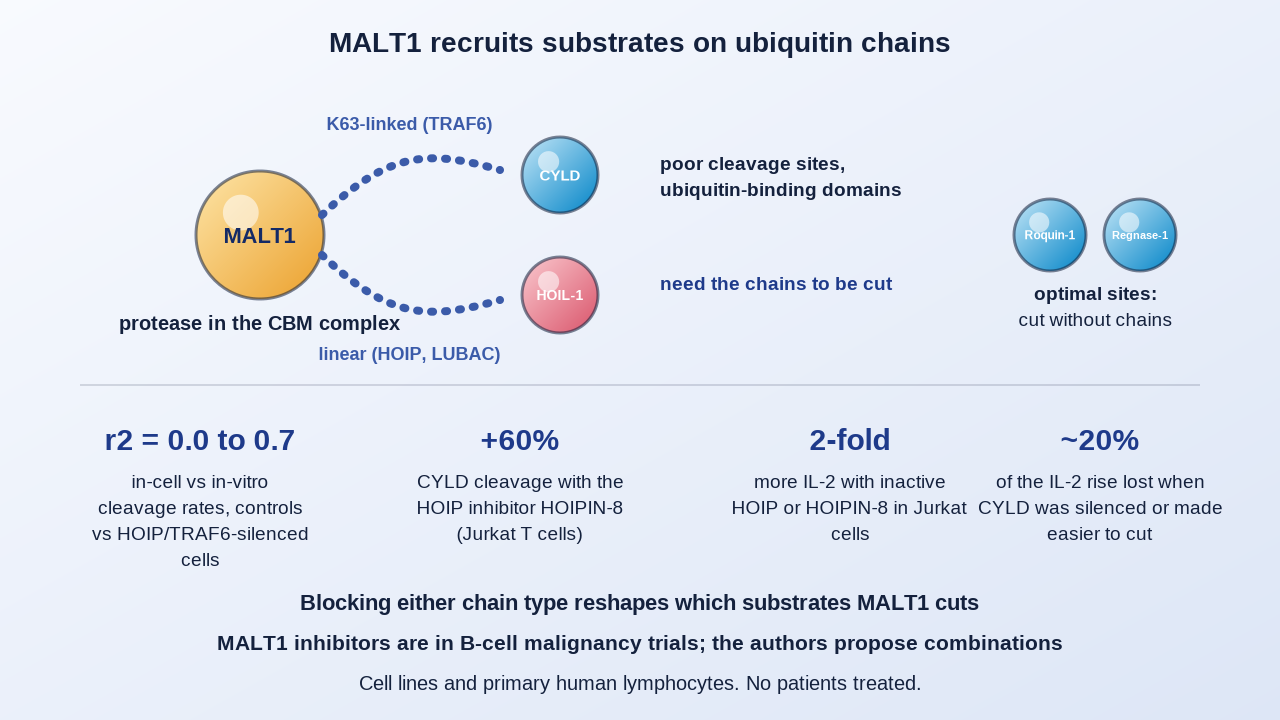
The protease MALT1 drives lymphocyte activation and lymphoma growth, and MALT1 inhibitors are being tested in B-cell malignancies. Yet its substrates are cut at very different efficiencies that do not follow its in vitro preferences. A Lausanne group now reports that MALT1 uses ubiquitin chains to pull in some of its targets.
| Measure | System | Reported result |
|---|---|---|
| In-cell vs in vitro cleavage correlation | Control vs HOIP/TRAF6-silenced Jurkat cells | r² = 0.0 vs 0.7 |
| CYLD cleavage with HOIPIN-8 | Endogenous CYLD, Jurkat cells | +60% (P < 0.002) |
| CYLD cleavage after TRAF6 silencing | Jurkat cells | About 40% lower |
| IL-2 with inactive HOIP or HOIPIN-8 | PI-stimulated Jurkat cells | About 2-fold higher |
| HOIP interactome vs known substrates | Proximity labeling | 18 of 191 overlap |
| Share of IL-2 rise lost with CYLD silenced | HOIPIN-8 (5 μM) | About 20% |
Background
After T or B cell receptor signaling, MALT1 becomes active within the CARMA1-BCL10-MALT1 (CBM) complex, which carries K63-linked chains made mainly by TRAF6 and linear chains made by the LUBAC component HOIP. MALT1 cuts substrates including Roquin-1, Regnase-1, RelB, CYLD, A20 and HOIL-1. In vitro, its catalytic efficiency is low (kcat/KM about 1,000 M⁻¹s⁻¹ for optimal peptides), and cleavage sites vary by two orders of magnitude, but the rules for substrate choice were unclear. MALT1 inhibition also impairs regulatory T cells and causes autoimmunity in mice.
Cell cleavage does not follow site quality
In stimulated Jurkat T cells, HOIL-1 was cleaved as fast as or faster than Roquin-1 despite a far poorer cleavage site, and A20 and BCL10 cleavage were slow. Similar results appeared in SU-DHL-6 and Raji B-cell lymphoma lines. The authors concluded that in vitro rates do not predict cleavage in living cells.
Ubiquitin-binding domains are required
HOIL-1, CYLD and A20 mutants unable to bind ubiquitin were cleaved markedly less than wild type in Jurkat and Raji cells. A MALT1 mutant lacking its three TRAF6-binding motifs (T6BD) still cut Roquin-1 and Regnase-1 but cut CYLD, HOIL-1, A20 and BCL10 poorly, at unchanged MALT1 inhibitor sensitivity. Silencing TRAF6 and HOIP together gave the same pattern, and the in-cell rates then correlated with the in vitro ones (r² = 0.7 versus 0.0 in control cells), so ubiquitin-mediated recruitment overrides intrinsic site preference.
A better site bypasses the chains
Replacing the suboptimal HOIL-1 site LQPR with LVPR, and the CYLD site FMSR with LVSR, raised cleavage even in ubiquitin-binding-deficient forms. Cleavage was greatest when both an optimal site and ubiquitin binding were present, which the authors read as synergy between recruitment and site quality.
HOIP and TRAF6 act differently
HOIL-1 cleavage depended mainly on HOIP, whereas CYLD cleavage fell by about 40% after TRAF6 silencing (significant by t test but not after multiple-comparison correction) and rose after HOIP silencing. The HOIP inhibitor HOIPIN-8 (15 μM, 3 h) did not alter MALT1 activity itself but lowered BCL10 cleavage and raised CYLD cleavage, by 60% for endogenous CYLD (P < 0.002), and did not change Regnase-1, A20 or RelB. In primary human CD4 T cells and B cells, HOIPIN-8 raised CYLD cleavage; adding the TRAF6 inhibitor C25-140 (200 μM) then lowered CYLD and HOIL-1 cleavage while leaving Roquin-1 unchanged. Proximity labeling of HOIP overlapped 18 of 191 known or predicted MALT1 substrates, and TAB3 cleavage was boosted by HOIPIN-8 in activated B-cell-type lymphoma lines.
Effect on cytokine output
Inactive HOIP and HOIPIN-8 each doubled IL-2 in PI-stimulated Jurkat cells, and the rise also appeared in primary CD4 and CD8 T cells. In TRAF6-silenced cells HOIPIN-8 lowered IL-2 instead. Silencing CYLD removed about 20% of the HOIPIN-8-induced rise, as did giving CYLD an easier cleavage site. Silencing Regnase-1 raised IL-2 by about 40% and Roquin-1 by about 3-fold, effects that combined TRAF6 and HOIP silencing abolished or reduced.
Keep in mind
The evidence comes from Jurkat, Raji and lymphoma cell lines and primary lymphocytes from donors, mostly by western blot with a few replicates in some panels, and the position of the recruiting chains on MALT1 was not mapped. The authors say it is unproven that chain binding alone is sufficient for cleavage and that BCL10 and Tensin-3 follow a different logic. Their proposal that combining MALT1 inhibitors with ubiquitination inhibitors might ease autoimmunity is a rationale, not a tested treatment.
- Paper
- Long MJC, Luo M, Strong SL, et al. The protease MALT1 uses K63-linked and linear ubiquitin chains to recruit and cleave substrates containing ubiquitin binding domains. Cell Reports. 2026;45(12):118379. Published November 26, 2026.
- Type
- Cell-line and primary lymphocyte study
- DOI
- 10.1016/j.celrep.2026.118379
- PubMed
- PMID 43097452
- Funding
- Swiss Cancer Research (KFS-5411-08-2021); Swiss National Science Foundation (310030_214974/1); Emma Muschamp Foundation; Novartis Foundation for Medical-Biological Research (23B094). The authors declare no competing interests.
Related articles
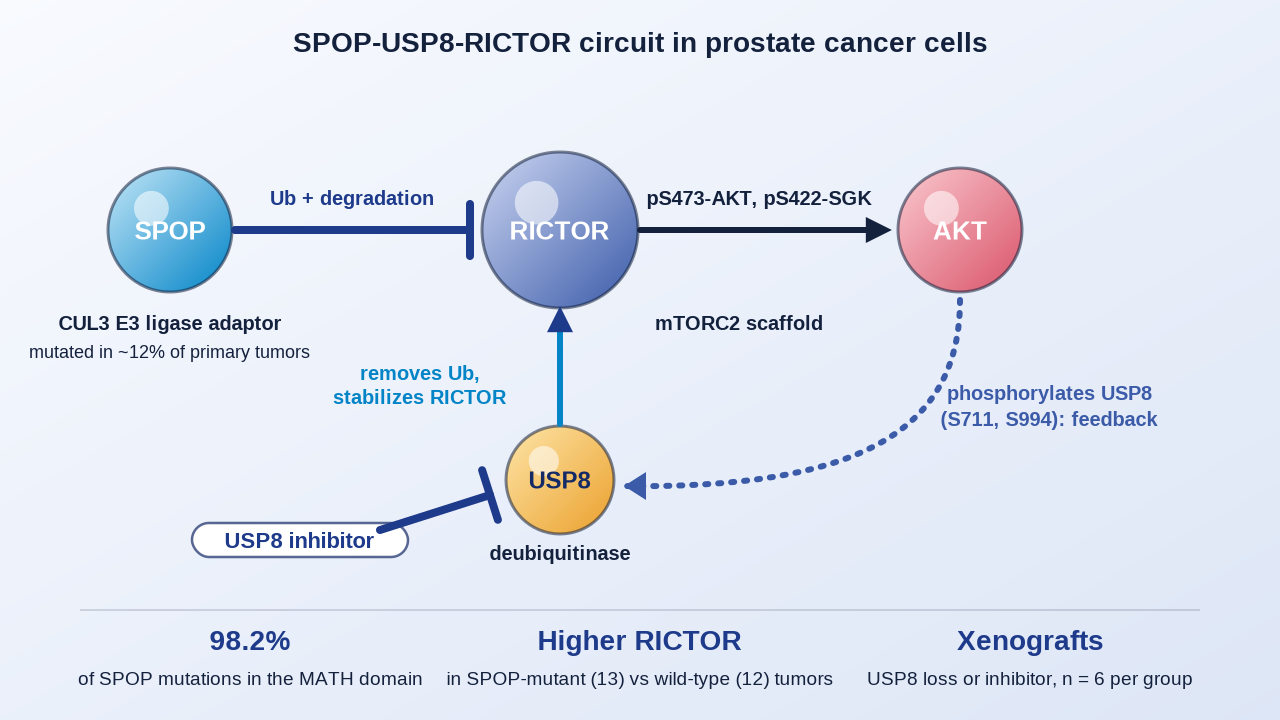 Daily brief · Nov 20, 2026SPOP Degrades RICTOR and USP8 Stabilizes It: Targeting USP8 Lowers mTORC2 Signaling and Slows Prostate Tumor Growth in Xenografts
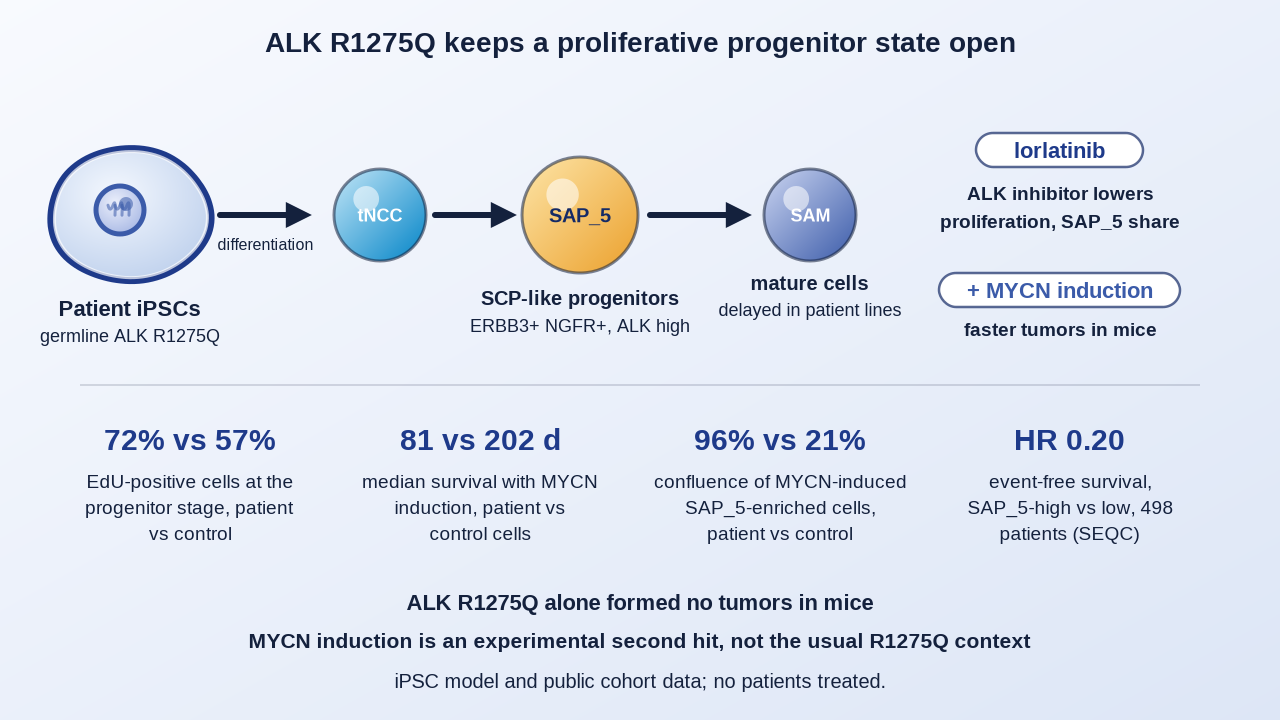 Daily brief · Nov 26, 2026The Germline ALK R1275Q Variant Keeps a Proliferative, Schwann Cell Precursor-Like Progenitor State Open in Patient iPSC Models, Making Cells More Prone to MYCN-Driven Neuroblastoma
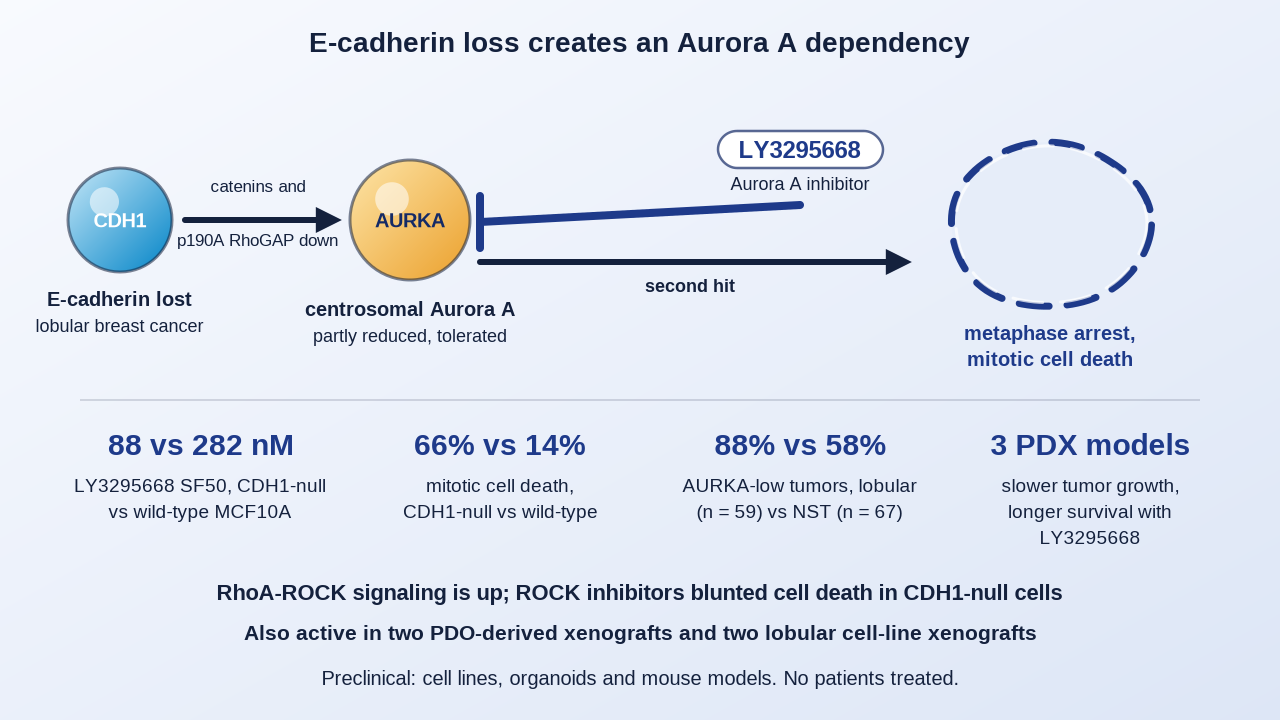 Daily brief · Nov 24, 2026Aurora A Inhibition Is Synthetic Lethal With E-Cadherin Loss in Lobular Breast Cancer Models, Slowing Tumors in Organoid-Derived and Patient-Derived Xenografts

Research focus: Molecular Oncology and Cancer Metabolism
Department of Molecular Diagnostics, Faculty of Biomedical Sciences, University of Benghazi, Libya
Weekly digest
The week's briefs and science news in one email. See the privacy policy.
Comments
No account needed. Comments are reviewed before they appear. Please be respectful and on topic.