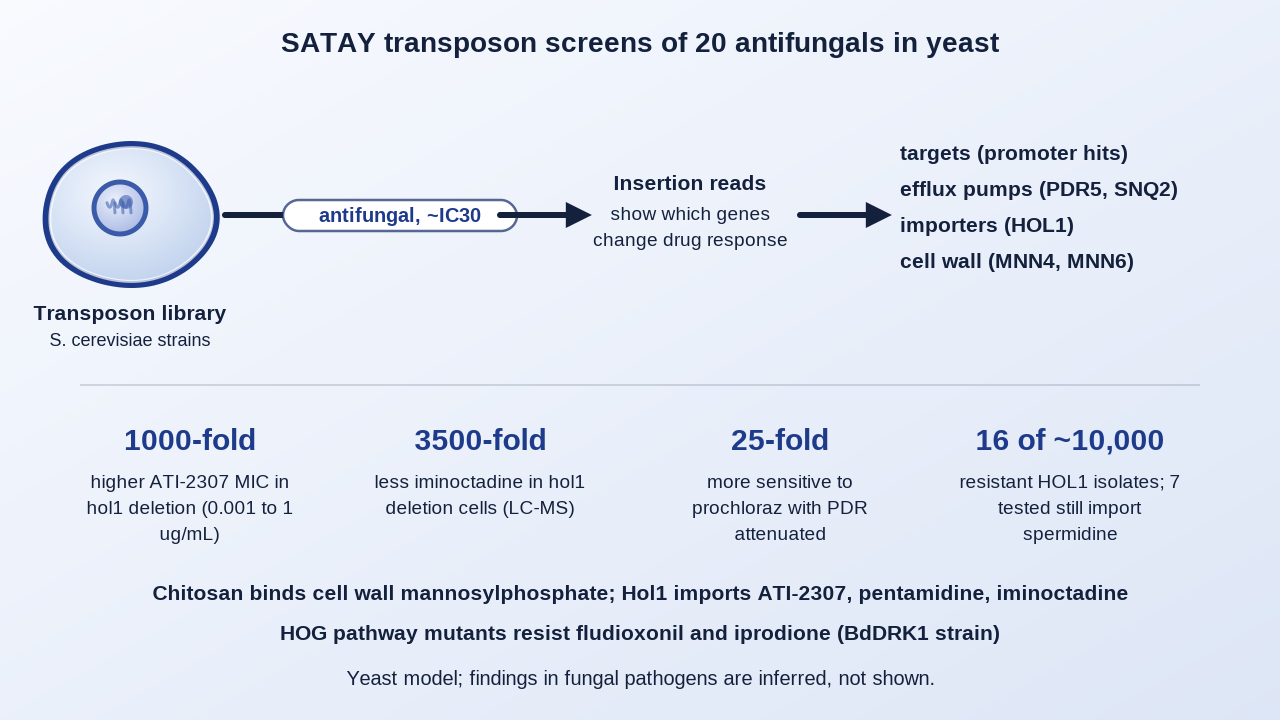
Fungal infections kill about 2.5 million people a year, and only four classes of clinical antifungals exist. Knowing how fungi resist these drugs, and how new compounds get into cells, is needed to protect them. An Oxford group now reports a genome-wide map of this biology for 20 antifungal compounds in baker's yeast.
| Measure | System | Reported result |
|---|---|---|
| Compounds screened | SATAY in S. cerevisiae | 20 antifungal compounds |
| ATI-2307 MIC, hol1 deletion vs wild type | Non-fermentative medium | 1 vs 0.001 μg/mL (1,000-fold) |
| Iminoctadine uptake, wild type vs hol1 deletion | LC-MS | 52.5 vs 0.015 μg per g pellet (3,500-fold) |
| Prochloraz sensitivity, PDR-attenuated vs wild type | 12geneΔ0HSR | 25-fold higher |
| Resistant HOL1 mutant isolates | About 10,000 transformants | 16 isolated; 7 retested |
| Chitosan concentration in AD1-8 screen | Acetic acid control | 2 μg/mL |
Background
Chemogenomic screens in Saccharomyces cerevisiae usually use deletion collections, which exist in a few laboratory strains and carry secondary mutations. Saturated transposon analysis in yeast (SATAY) instead builds libraries in any strain, with several independent insertions per gene, and reads loss-of-function and gain-of-function effects from transposons that sit in coding sequences or promoters.
What the screens recover
Libraries were grown at about 30% growth inhibition (roughly IC30) for each compound. Amphotericin B selected insertions in ergosterol homeostasis, TORC1 and EGO complex genes, and caspofungin in sphingolipid biosynthesis genes. For cerulenin, fenpropimorph, prochloraz and tunicamycin, the most enriched promoter insertions lay upstream of the drug targets FAS1, ERG2 and ERG24, ERG11 and ALG7, respectively. Promoter insertions at PDR5 were selected by cerulenin, fluconazole, prochloraz and soraphen A, and at SNQ2 by fluazinam and fludioxonil, pointing to efflux pumps. Insertion patterns at FLR1 and YAP1 also separated drugs that trigger oxidative stress signaling from those that do not.
Drug-sensitive strains reveal more
In a wild-type library, 10 μg/mL prochloraz mainly selected mitochondrial genes, which activate the PDR network. A PDR-attenuated strain (12geneΔ0HSR) was 25-fold more sensitive to prochloraz, and at 0.4 μg/mL the top hits were Golgi trafficking genes (MAK3, MAK10, ARL3, SYS1, ARL1). For fludioxonil and iprodione, which do not act on laboratory yeast, the authors expressed the group III histidine kinase Drk1 from Blastomyces dermatitidis in sln1Δ cells. Insertions in the HOG pathway (SSK1, SSK2, SSK22, PBS2, HOG1), the mediator complex, INO80 and TUP1 conferred resistance, and no selection appeared for genes proposed to act upstream of the kinases, which argues against that model.
Chitosan binds mannosylphosphate
Chitosan barely affects the standard BY4741 background but inhibited strain AD1-8. In AD1-8, 2 μg/mL chitosan selected insertions in N-glycan mannosylation, Golgi transport, GDP-mannose and Mn²⁺ supply genes, and in MNN4 and MNN6, which add mannosylphosphate, as well as in MNN1 promoter insertions that likely shift sugar chains toward non-phosphorylated mannose. AD1-8 cells stained strongly with the cationic dye alcian blue in an MNN4-dependent way, whereas BY4741 did not, and fluorescein-labeled chitosan bound AD1-8 but not mnn4Δ or BY4741 cells. The authors conclude that chitosan binds the negatively charged cell wall mannosylphosphate.
Hol1 imports ATI-2307
ATI-2307 is an experimental antifungal active against fluconazole- and echinocandin-resistant Candida. In non-fermentative medium, HOL1, a high-affinity polyamine transporter, carried the strongest resistance insertions. Deleting HOL1 raised the minimal inhibitory concentration 1,000-fold, from 0.001 to 1 μg/mL. Wild-type cells accumulated about 0.1 μg of ATI-2307 per gram of pellet, whereas hol1Δ cells were below the detection limit, and expressing Candida albicans HOL1 partly restored uptake and sensitivity. Hol1 also imported pentamidine and iminoctadine, with a 3,500-fold difference in iminoctadine content (52.5 versus 0.015 μg per gram). Insertions that weaken the proton-motive force, which drives Hol1, were also selected.
Resistance with little cost
Because HOL1 is needed for polyamine uptake, the authors asked whether mutations could block drug import but spare polyamines. Of about 10,000 mutagenized transformants in a spe1Δ hol1Δ background, 16 resisted ATI-2307, and seven plasmids retested also resisted pentamidine and iminoctadine while still supporting growth that requires spermidine uptake. Residues N57, L325 and E327 recurred and mostly clustered near the cytoplasmic base of the predicted pore. The authors suggest that resistance could arise at low fitness cost and recommend precaution if ATI-2307 enters clinical use.
Keep in mind
All screens are in S. cerevisiae, so transport and resistance mechanisms in pathogens are inferred, apart from partial rescue by Candida albicans HOL1. The ATI-2307 link to gluconeogenesis genes is unexplained, and the fitness cost of the Hol1 mutants was not measured in animals or clinical isolates. The study does not test treatment, and the authors flag the Hol1 findings as a possible design opportunity and a resistance risk, not as established clinical facts.
- Paper
- Karadzas MT, Michel AH, Mosbach A, et al. SATAY-based chemogenomic screening uncovers antifungal resistance mechanisms and key determinants of ATI-2307 and chitosan sensitivity. eLife. 2026;14:105333. Published November 23, 2026.
- Type
- Yeast transposon-sequencing screens with biochemical follow-up
- DOI
- 10.7554/eLife.105333
- PubMed
- PMID 43071423
- Funding
- BBSRC and Syngenta Industrial CASE studentship (BB/T008784/1); Wellcome Trust (214291/Z/18/Z). The study was co-supported by Syngenta, and three authors are affiliated with Syngenta; the authors declare no competing interests.
Related articles
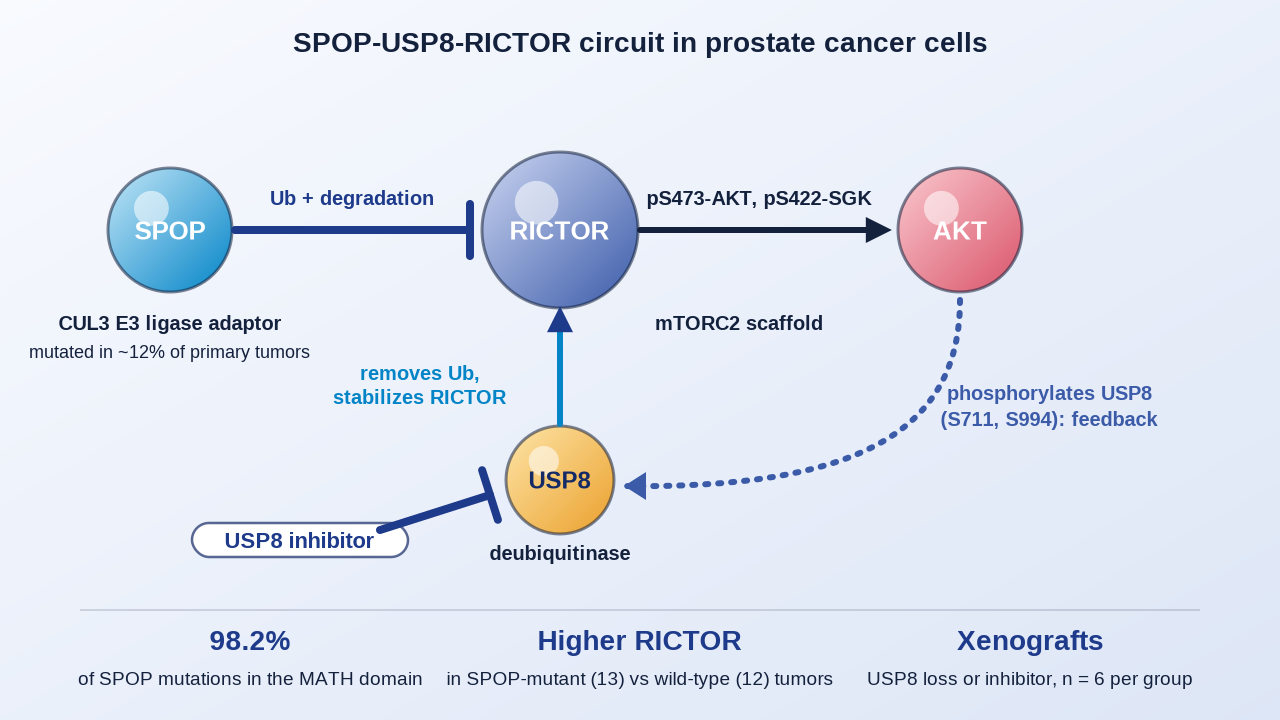 Daily brief · Nov 20, 2026SPOP Degrades RICTOR and USP8 Stabilizes It: Targeting USP8 Lowers mTORC2 Signaling and Slows Prostate Tumor Growth in Xenografts
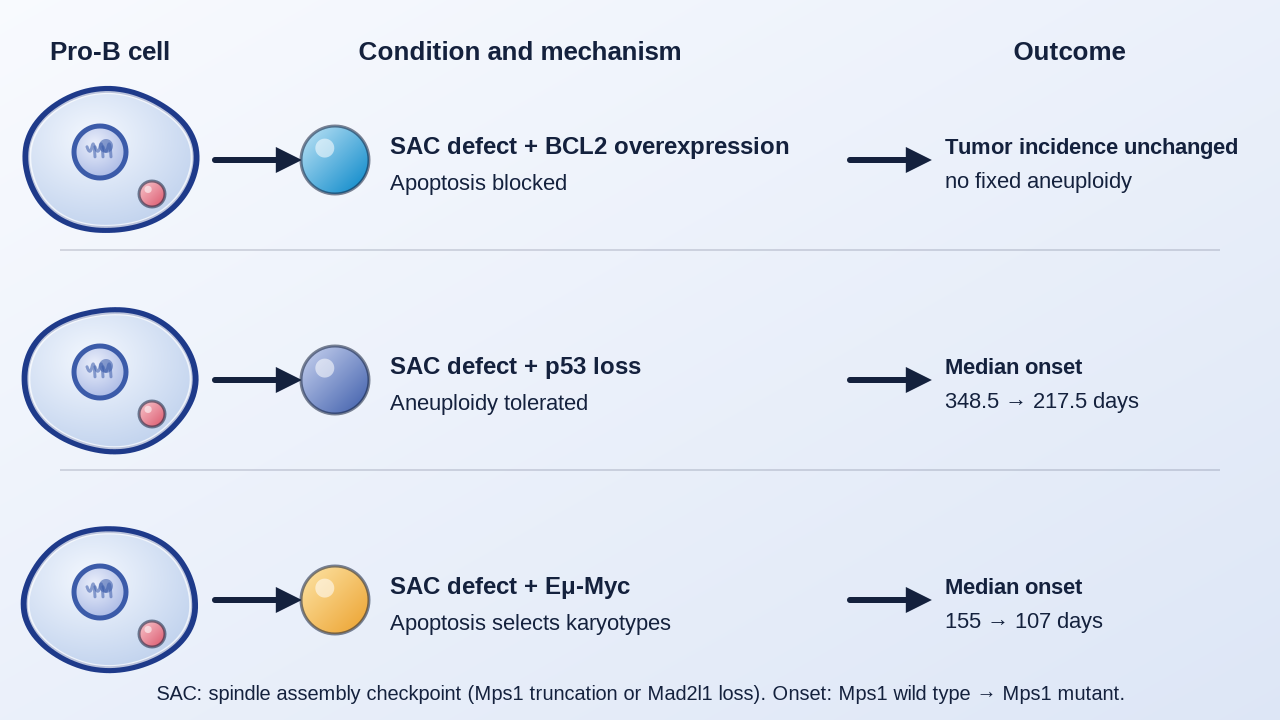 Daily brief · Nov 19, 2026Chromosome Missegregation Kills Developing B Cells but Speeds MYC-Driven Lymphoma in Mice, With Apoptosis Selecting the Surviving Karyotypes
 Daily brief · Nov 15, 2026In Enzalutamide-Resistant Prostate Cancer Cells, m6A Marking of ARv7 mRNA Raises Its Translation, Lactate Feeds the Loop, and a METTL3 Inhibitor Plus Enzalutamide Slowed Xenograft Growth

Research focus: Molecular Oncology and Cancer Metabolism
Department of Molecular Diagnostics, Faculty of Biomedical Sciences, University of Benghazi, Libya
Weekly digest
The week's briefs and science news in one email. See the privacy policy.
Comments
No account needed. Comments are reviewed before they appear. Please be respectful and on topic.